
Perlancia Peptides
Perlancia Peptides restricts purchases to individuals conducting laboratory or institutional research and at least 21 years old. By entering, you confirm you meet this requirement.
All products offered on this website are sold strictly as research chemicals for in-vitro laboratory research use only. They are not drugs, foods, cosmetics, dietary supplements or medical devices, and they are not intended for human or veterinary consumption, diagnostic use, or therapeutic use of any kind.
Selecting “No” will take you away from this website. This confirmation will be remembered on this device for 30 days.
$62.00
630 in stock



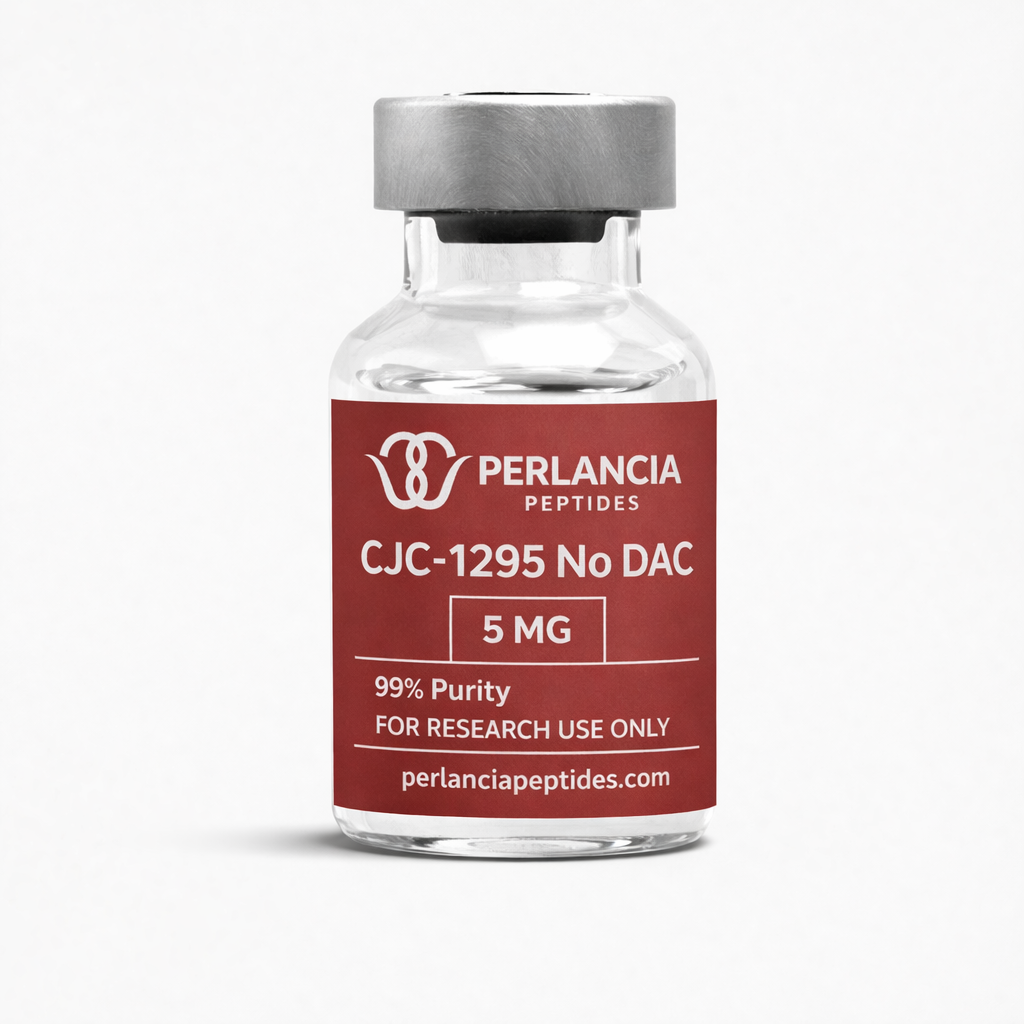
CJC-1295 (No DAC) is a synthetic peptide analog derived from growth hormone releasing hormone (GHRH). It is commonly studied in laboratory research exploring endocrine signaling pathways and peptide interactions involved in hormonal regulation mechanisms.
As a modified fragment of GHRH, CJC-1295 (No DAC) has been investigated in experimental models examining receptor-mediated signaling processes within the hypothalamic-pituitary axis. Research interest in this peptide centers on its structural properties and its interaction with receptors involved in growth hormone signaling pathways.
This compound is supplied as a lyophilized peptide powder intended for laboratory research and analytical applications.
CJC-1295 (No DAC) has been explored in a variety of laboratory research contexts related to endocrine and signaling pathways.
Research applications may include:
These areas of study focus on understanding peptide-receptor dynamics and hormonal signaling mechanisms within controlled laboratory environments.
Research has investigated the interaction of CJC-1295 with receptors associated with growth hormone releasing hormone signaling pathways.
Studies have explored how peptide analogs derived from GHRH may interact with receptor systems located within the anterior pituitary, where growth hormone regulatory mechanisms are commonly studied in laboratory models.
Scientific research has examined:
These investigations help researchers better understand the structural and functional characteristics of peptide-based signaling molecules.
CJC-1295 is a modified analog of growth hormone releasing hormone designed to investigate peptide-receptor interactions and signaling behavior within endocrine research models.
Scientific literature has explored:
These studies contribute to a broader understanding of peptide signaling mechanisms and receptor interactions in endocrine research.
For research stability purposes, this compound should be stored under refrigerated conditions after reconstitution.
Lyophilized peptide powders are typically stored in a cool, dry environment prior to reconstitution to maintain stability during laboratory handling.
FOR RESEARCH USE ONLY.
This product is intended strictly for laboratory research purposes. It is not intended for human or veterinary use.
CJC-1295 is a synthetic peptide derived from the growth hormone releasing hormone (GHRH) family of signaling peptides. GHRH is a naturally occurring hormone involved in signaling processes within the hypothalamic-pituitary axis.
Researchers developed modified GHRH analogs to study peptide stability, receptor binding characteristics, and signaling pathway interactions in controlled experimental settings.
CJC-1295 (No DAC) represents a modified peptide structure designed to investigate how alterations to peptide sequences may influence receptor interactions and signaling behavior in endocrine research models.
Because of its structural similarities to naturally occurring signaling peptides, CJC-1295 has become a subject of interest in laboratory investigations examining peptide-based regulatory pathways.
CJC-1295 has been studied in laboratory models exploring peptide signaling pathways associated with endocrine regulation and hypothalamic-pituitary communication mechanisms.
Scientific studies have examined how modified GHRH peptides interact with receptor systems involved in hormonal signaling pathways.
These investigations focus on peptide binding behavior and receptor activation mechanisms.
Laboratory research has explored how modifications to peptide structures may influence stability, degradation patterns, and receptor interaction dynamics.
Understanding these characteristics helps researchers evaluate the structural properties of synthetic peptide analogs.
Peptide-based signaling molecules such as CJC-1295 are frequently examined in studies investigating intracellular communication pathways and receptor-mediated signaling mechanisms.
These studies contribute to broader research efforts aimed at understanding peptide signaling systems.
Research has examined the interaction of CJC-1295 with signaling pathways associated with growth hormone releasing hormone receptor systems.
These pathways involve communication between the hypothalamus and anterior pituitary within endocrine signaling networks. Studies investigating these pathways explore how peptide analogs may influence receptor signaling behavior and downstream molecular communication processes.
Investigations in laboratory models focus on:
Scientific literature examining GHRH-derived peptides includes studies focused on peptide structure, receptor binding behavior, and endocrine signaling pathways.
Research efforts have explored how modified peptide analogs may behave in laboratory environments when interacting with receptor systems associated with hormone signaling.
These investigations contribute to a broader body of knowledge related to peptide chemistry, receptor interaction mechanisms, and signaling pathway dynamics.
Relevant scientific research regarding peptide signaling and GHRH analogs can be found through sources such as:
Researchers are encouraged to consult peer-reviewed literature for detailed information regarding experimental studies involving GHRH-derived peptides.
There are no reviews yet.
Only logged in customers who have purchased this product may leave a review.
CJC-1295 (No DAC) is a synthetic peptide analog derived from growth hormone releasing hormone (GHRH). It is commonly studied in laboratory research exploring endocrine signaling pathways and peptide interactions involved in hormonal regulation mechanisms.
As a modified fragment of GHRH, CJC-1295 (No DAC) has been investigated in experimental models examining receptor-mediated signaling processes within the hypothalamic-pituitary axis. Research interest in this peptide centers on its structural properties and its interaction with receptors involved in growth hormone signaling pathways.
This compound is supplied as a lyophilized peptide powder intended for laboratory research and analytical applications.
CJC-1295 (No DAC) has been explored in a variety of laboratory research contexts related to endocrine and signaling pathways.
Research applications may include:
These areas of study focus on understanding peptide-receptor dynamics and hormonal signaling mechanisms within controlled laboratory environments.
Research has investigated the interaction of CJC-1295 with receptors associated with growth hormone releasing hormone signaling pathways.
Studies have explored how peptide analogs derived from GHRH may interact with receptor systems located within the anterior pituitary, where growth hormone regulatory mechanisms are commonly studied in laboratory models.
Scientific research has examined:
These investigations help researchers better understand the structural and functional characteristics of peptide-based signaling molecules.
CJC-1295 is a modified analog of growth hormone releasing hormone designed to investigate peptide-receptor interactions and signaling behavior within endocrine research models.
Scientific literature has explored:
These studies contribute to a broader understanding of peptide signaling mechanisms and receptor interactions in endocrine research.
For research stability purposes, this compound should be stored under refrigerated conditions after reconstitution.
Lyophilized peptide powders are typically stored in a cool, dry environment prior to reconstitution to maintain stability during laboratory handling.
FOR RESEARCH USE ONLY.
This product is intended strictly for laboratory research purposes. It is not intended for human or veterinary use.
CJC-1295 is a synthetic peptide derived from the growth hormone releasing hormone (GHRH) family of signaling peptides. GHRH is a naturally occurring hormone involved in signaling processes within the hypothalamic-pituitary axis.
Researchers developed modified GHRH analogs to study peptide stability, receptor binding characteristics, and signaling pathway interactions in controlled experimental settings.
CJC-1295 (No DAC) represents a modified peptide structure designed to investigate how alterations to peptide sequences may influence receptor interactions and signaling behavior in endocrine research models.
Because of its structural similarities to naturally occurring signaling peptides, CJC-1295 has become a subject of interest in laboratory investigations examining peptide-based regulatory pathways.
CJC-1295 has been studied in laboratory models exploring peptide signaling pathways associated with endocrine regulation and hypothalamic-pituitary communication mechanisms.
Scientific studies have examined how modified GHRH peptides interact with receptor systems involved in hormonal signaling pathways.
These investigations focus on peptide binding behavior and receptor activation mechanisms.
Laboratory research has explored how modifications to peptide structures may influence stability, degradation patterns, and receptor interaction dynamics.
Understanding these characteristics helps researchers evaluate the structural properties of synthetic peptide analogs.
Peptide-based signaling molecules such as CJC-1295 are frequently examined in studies investigating intracellular communication pathways and receptor-mediated signaling mechanisms.
These studies contribute to broader research efforts aimed at understanding peptide signaling systems.
Research has examined the interaction of CJC-1295 with signaling pathways associated with growth hormone releasing hormone receptor systems.
These pathways involve communication between the hypothalamus and anterior pituitary within endocrine signaling networks. Studies investigating these pathways explore how peptide analogs may influence receptor signaling behavior and downstream molecular communication processes.
Investigations in laboratory models focus on:
Scientific literature examining GHRH-derived peptides includes studies focused on peptide structure, receptor binding behavior, and endocrine signaling pathways.
Research efforts have explored how modified peptide analogs may behave in laboratory environments when interacting with receptor systems associated with hormone signaling.
These investigations contribute to a broader body of knowledge related to peptide chemistry, receptor interaction mechanisms, and signaling pathway dynamics.
Relevant scientific research regarding peptide signaling and GHRH analogs can be found through sources such as:
Researchers are encouraged to consult peer-reviewed literature for detailed information regarding experimental studies involving GHRH-derived peptides.



Reviews
There are no reviews yet.
Only logged in customers who have purchased this product may leave a review.