
Perlancia Peptides
Perlancia Peptides restricts purchases to individuals conducting laboratory or institutional research and at least 21 years old. By entering, you confirm you meet this requirement.
All products offered on this website are sold strictly as research chemicals for in-vitro laboratory research use only. They are not drugs, foods, cosmetics, dietary supplements or medical devices, and they are not intended for human or veterinary consumption, diagnostic use, or therapeutic use of any kind.
Selecting “No” will take you away from this website. This confirmation will be remembered on this device for 30 days.
$129.00
625 in stock



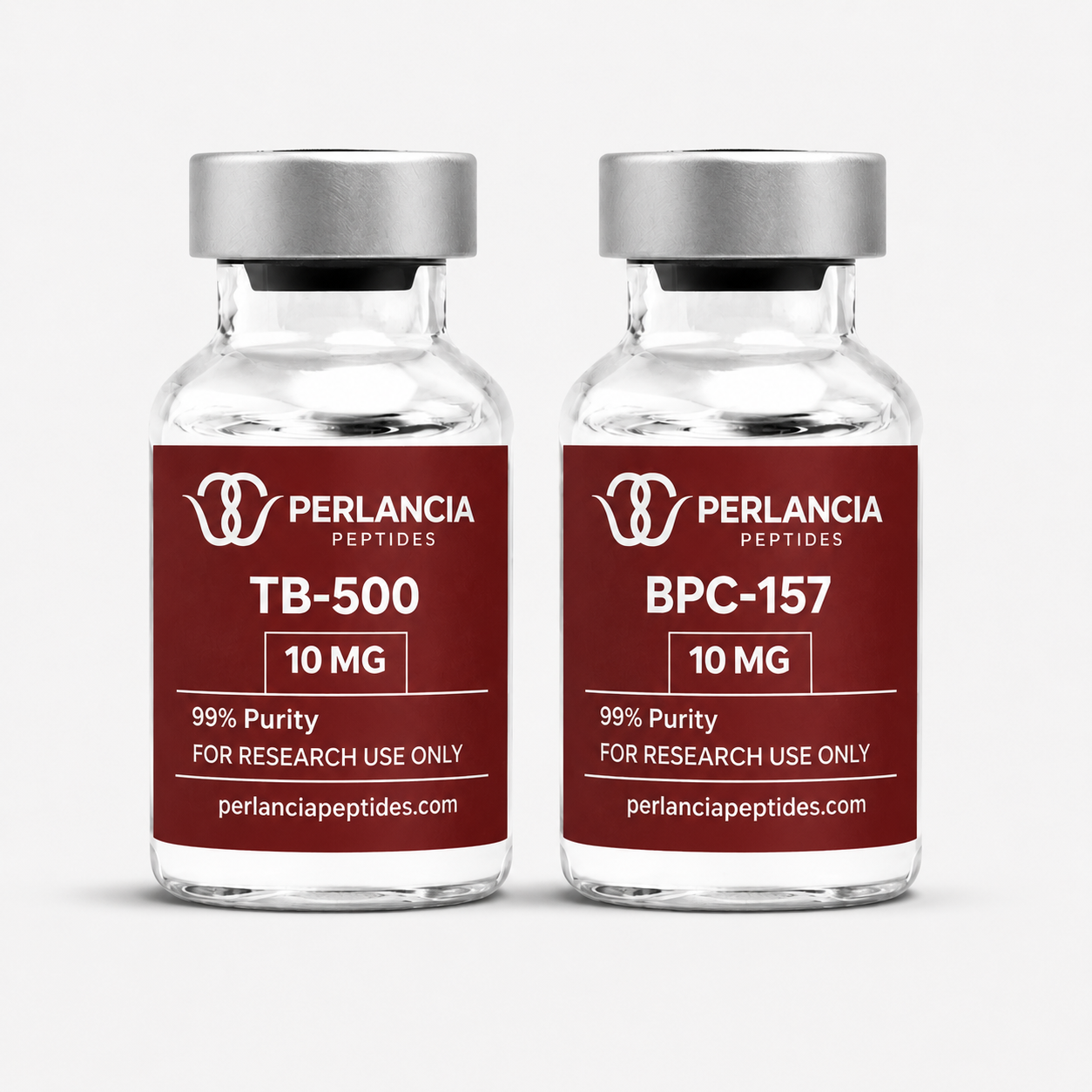
The Dual Peptide Research Kit combines two synthetic research peptides — TB-500 (Thymosin Beta-4) and BPC-157 (Body Protection Compound-157) — each classified within distinct peptide families and studied extensively in laboratory settings for their interactions with cellular signaling pathways. This kit has been developed to support research environments requiring simultaneous access to both compounds within a single procurement.
In research environments, TB-500 and BPC-157 are frequently studied in relation to cellular regulatory signaling, peptide receptor interactions, and pathway mechanisms associated with tissue-level cellular communication. Each compound represents a separate and distinct area of peptide research with independently documented laboratory investigation histories.
Scientists have explored the receptor binding characteristics and signaling behavior of both compounds within controlled experimental models, examining how each peptide interacts with its respective biological pathways in laboratory research settings.
Research Applications
This dual compound research kit has been examined across several areas of laboratory research, including:
These research applications focus on understanding how synthetic peptides from distinct classification families interact with receptor systems involved in cellular signaling networks.
Mechanism and Pathway Context
Research has investigated TB-500 for its interaction with actin-binding pathways, a cellular mechanism involved in cytoskeletal organization and peptide mediated cellular signaling. Studies have explored how this peptide interacts with G-actin sequestration mechanisms and how this interaction influences downstream signaling cascades involved in cellular regulatory pathway activity.
Research has investigated BPC-157 for its interaction with growth factor signaling pathways, including those associated with vascular endothelial and fibroblast growth factor receptor systems in laboratory models. Studies have explored how this pentadecapeptide interacts with receptor specific signaling mechanisms that influence cellular communication pathways in experimental settings.
In experimental settings, researchers analyze how each compound in this kit binds to its respective receptor systems and how these interactions influence downstream signaling cascades involved in cellular regulation and pathway activity. Laboratory investigations evaluate the receptor selectivity and signaling pathway specificity associated with each synthetic peptide independently.
Laboratory investigations also examine how peptides from distinct structural classifications interact with overlapping and divergent cellular signaling networks, providing researchers with comparative data across multiple peptide compound classes within a single research protocol.
Research Summary
TB-500 was identified as part of broader research into thymosin family peptides and their interaction with actin-binding mechanisms in cellular systems. Early peptide research explored synthetic thymosin derivatives capable of interacting with cytoskeletal regulatory pathways while maintaining structural stability in laboratory conditions.
BPC-157 was developed as part of ongoing research into gastric pentadecapeptides and their interaction with growth factor receptor signaling systems. Early investigations explored synthetic peptides derived from gastric protein sequences for their receptor interaction profiles and signaling characteristics in preclinical laboratory models.
Scientific investigations have examined the biochemical characteristics, receptor binding activity, and signaling interactions of both compounds within their respective research pathway models. Each compound has independently accumulated a body of preclinical laboratory literature exploring distinct aspects of peptide mediated cellular signaling.
Current research continues to explore how peptides in these respective classes interact with receptor mediated signaling systems and cellular regulatory pathways, with both compounds representing well-documented subjects of ongoing laboratory investigation.
Product Specifications
TB-500 (Thymosin Beta-4)
BPC-157 (Body Protection Compound-157)
Storage and Handling
Both compounds in this kit are supplied as lyophilized research peptide powders. For laboratory stability purposes, storage under refrigerated conditions is recommended for each compound following reconstitution. Proper laboratory handling procedures should be followed to maintain compound integrity for both peptides during research applications.
Research Use Disclaimer
FOR RESEARCH USE ONLY. This product is intended strictly for laboratory research purposes. It is not intended for human or veterinary use.
Scientific Background
TB-500 belongs to the thymosin family of peptides, a class of naturally occurring signaling molecules first identified in thymic tissue research. Thymosin Beta-4 was isolated and characterized as part of broader investigations into peptide based cellular signaling compounds involved in cytoskeletal regulatory mechanisms. Researchers have explored its biochemical structure and actin-binding characteristics within controlled laboratory models focused on cytoskeletal organization and cellular signaling systems. Its interaction with G-actin sequestration pathways makes it a compound of ongoing interest in peptide signaling research.
BPC-157 belongs to the class of synthetic pentadecapeptides derived from sequences identified in gastric protein research. It was developed during investigations into peptide compounds capable of interacting with growth factor receptor signaling systems in laboratory models. Researchers have explored its biochemical structure and receptor binding characteristics within controlled laboratory models focused on vascular and fibroblast growth factor signaling pathways. Its structure as a fifteen amino acid synthetic peptide allows scientists to examine peptide receptor interaction dynamics and signaling specificity within growth factor related research pathways.
The Dual Peptide Research Kit provides research environments with simultaneous access to two independently documented research compounds from distinct peptide classification families, supporting laboratory protocols that require comparative or parallel investigation of multiple peptide signaling systems.
Key Research Areas
Cytoskeletal Signaling Research — TB-500 Laboratory studies have explored TB-500 as a model compound for examining actin-binding mechanisms and cytoskeletal regulatory signaling pathways. These investigations help researchers understand how synthetic thymosin peptides interact with G-actin sequestration systems in controlled laboratory models.
Growth Factor Receptor Signaling Research — BPC-157 Research has examined how BPC-157 interacts with growth factor receptor signaling systems and how this interaction influences receptor activation and intracellular signaling cascades in experimental models. These investigations help researchers understand how synthetic pentadecapeptides interact with vascular and fibroblast growth factor receptor pathways.
Peptide Structure and Binding Studies — Both Compounds Scientists study both TB-500 and BPC-157 within peptide chemistry research to understand how structural variations across distinct peptide classification families influence receptor affinity and signaling behavior. These comparative investigations support broader understanding of structure-activity relationships in synthetic peptide research.
Cellular Regulatory Pathway Research — Both Compounds Experimental models have explored how peptides from the thymosin and pentadecapeptide classification families influence cellular communication pathways associated with distinct regulatory signaling networks. These investigations support comparative research into how structurally distinct synthetic peptides interact with overlapping and divergent cellular signaling systems.
Pathway Interaction Overview
Research has examined TB-500 for its interaction with actin-binding pathways involved in cytoskeletal organization and peptide mediated cellular signaling, and BPC-157 for its interaction with growth factor receptor systems involved in vascular and fibroblast signaling pathways in laboratory models.
Laboratory studies investigate how receptor binding for each compound independently influences intracellular signaling mechanisms, including pathways associated with cytoskeletal communication systems for TB-500 and growth factor receptor cascades for BPC-157 in controlled research settings.
Scientists analyze how receptor activation for each respective compound may influence downstream signaling pathways that regulate cellular activity and peptide signaling interactions within their independently documented research pathway contexts.
Literature Overview
Scientific literature surrounding the TB-500 and BPC-157 compounds addresses distinct areas of peptide receptor interaction research, with each compound independently documented across preclinical laboratory investigations.
Key themes explored in laboratory research include:
These investigations help expand scientific understanding of how synthetic peptides from distinct classification families interact with receptor mediated signaling systems.
References
TB-500 (Thymosin Beta-4)
BPC-157 (Body Protection Compound-157)
Researchers interested in the biochemical and signaling characteristics of TB-500 and BPC-157 are encouraged to review peer reviewed publications within these scientific databases.
There are no reviews yet.
Only logged in customers who have purchased this product may leave a review.
The Dual Peptide Research Kit combines two synthetic research peptides — TB-500 (Thymosin Beta-4) and BPC-157 (Body Protection Compound-157) — each classified within distinct peptide families and studied extensively in laboratory settings for their interactions with cellular signaling pathways. This kit has been developed to support research environments requiring simultaneous access to both compounds within a single procurement.
In research environments, TB-500 and BPC-157 are frequently studied in relation to cellular regulatory signaling, peptide receptor interactions, and pathway mechanisms associated with tissue-level cellular communication. Each compound represents a separate and distinct area of peptide research with independently documented laboratory investigation histories.
Scientists have explored the receptor binding characteristics and signaling behavior of both compounds within controlled experimental models, examining how each peptide interacts with its respective biological pathways in laboratory research settings.
Research Applications
This dual compound research kit has been examined across several areas of laboratory research, including:
These research applications focus on understanding how synthetic peptides from distinct classification families interact with receptor systems involved in cellular signaling networks.
Mechanism and Pathway Context
Research has investigated TB-500 for its interaction with actin-binding pathways, a cellular mechanism involved in cytoskeletal organization and peptide mediated cellular signaling. Studies have explored how this peptide interacts with G-actin sequestration mechanisms and how this interaction influences downstream signaling cascades involved in cellular regulatory pathway activity.
Research has investigated BPC-157 for its interaction with growth factor signaling pathways, including those associated with vascular endothelial and fibroblast growth factor receptor systems in laboratory models. Studies have explored how this pentadecapeptide interacts with receptor specific signaling mechanisms that influence cellular communication pathways in experimental settings.
In experimental settings, researchers analyze how each compound in this kit binds to its respective receptor systems and how these interactions influence downstream signaling cascades involved in cellular regulation and pathway activity. Laboratory investigations evaluate the receptor selectivity and signaling pathway specificity associated with each synthetic peptide independently.
Laboratory investigations also examine how peptides from distinct structural classifications interact with overlapping and divergent cellular signaling networks, providing researchers with comparative data across multiple peptide compound classes within a single research protocol.
Research Summary
TB-500 was identified as part of broader research into thymosin family peptides and their interaction with actin-binding mechanisms in cellular systems. Early peptide research explored synthetic thymosin derivatives capable of interacting with cytoskeletal regulatory pathways while maintaining structural stability in laboratory conditions.
BPC-157 was developed as part of ongoing research into gastric pentadecapeptides and their interaction with growth factor receptor signaling systems. Early investigations explored synthetic peptides derived from gastric protein sequences for their receptor interaction profiles and signaling characteristics in preclinical laboratory models.
Scientific investigations have examined the biochemical characteristics, receptor binding activity, and signaling interactions of both compounds within their respective research pathway models. Each compound has independently accumulated a body of preclinical laboratory literature exploring distinct aspects of peptide mediated cellular signaling.
Current research continues to explore how peptides in these respective classes interact with receptor mediated signaling systems and cellular regulatory pathways, with both compounds representing well-documented subjects of ongoing laboratory investigation.
Product Specifications
TB-500 (Thymosin Beta-4)
BPC-157 (Body Protection Compound-157)
Storage and Handling
Both compounds in this kit are supplied as lyophilized research peptide powders. For laboratory stability purposes, storage under refrigerated conditions is recommended for each compound following reconstitution. Proper laboratory handling procedures should be followed to maintain compound integrity for both peptides during research applications.
Research Use Disclaimer
FOR RESEARCH USE ONLY. This product is intended strictly for laboratory research purposes. It is not intended for human or veterinary use.
Scientific Background
TB-500 belongs to the thymosin family of peptides, a class of naturally occurring signaling molecules first identified in thymic tissue research. Thymosin Beta-4 was isolated and characterized as part of broader investigations into peptide based cellular signaling compounds involved in cytoskeletal regulatory mechanisms. Researchers have explored its biochemical structure and actin-binding characteristics within controlled laboratory models focused on cytoskeletal organization and cellular signaling systems. Its interaction with G-actin sequestration pathways makes it a compound of ongoing interest in peptide signaling research.
BPC-157 belongs to the class of synthetic pentadecapeptides derived from sequences identified in gastric protein research. It was developed during investigations into peptide compounds capable of interacting with growth factor receptor signaling systems in laboratory models. Researchers have explored its biochemical structure and receptor binding characteristics within controlled laboratory models focused on vascular and fibroblast growth factor signaling pathways. Its structure as a fifteen amino acid synthetic peptide allows scientists to examine peptide receptor interaction dynamics and signaling specificity within growth factor related research pathways.
The Dual Peptide Research Kit provides research environments with simultaneous access to two independently documented research compounds from distinct peptide classification families, supporting laboratory protocols that require comparative or parallel investigation of multiple peptide signaling systems.
Key Research Areas
Cytoskeletal Signaling Research — TB-500 Laboratory studies have explored TB-500 as a model compound for examining actin-binding mechanisms and cytoskeletal regulatory signaling pathways. These investigations help researchers understand how synthetic thymosin peptides interact with G-actin sequestration systems in controlled laboratory models.
Growth Factor Receptor Signaling Research — BPC-157 Research has examined how BPC-157 interacts with growth factor receptor signaling systems and how this interaction influences receptor activation and intracellular signaling cascades in experimental models. These investigations help researchers understand how synthetic pentadecapeptides interact with vascular and fibroblast growth factor receptor pathways.
Peptide Structure and Binding Studies — Both Compounds Scientists study both TB-500 and BPC-157 within peptide chemistry research to understand how structural variations across distinct peptide classification families influence receptor affinity and signaling behavior. These comparative investigations support broader understanding of structure-activity relationships in synthetic peptide research.
Cellular Regulatory Pathway Research — Both Compounds Experimental models have explored how peptides from the thymosin and pentadecapeptide classification families influence cellular communication pathways associated with distinct regulatory signaling networks. These investigations support comparative research into how structurally distinct synthetic peptides interact with overlapping and divergent cellular signaling systems.
Pathway Interaction Overview
Research has examined TB-500 for its interaction with actin-binding pathways involved in cytoskeletal organization and peptide mediated cellular signaling, and BPC-157 for its interaction with growth factor receptor systems involved in vascular and fibroblast signaling pathways in laboratory models.
Laboratory studies investigate how receptor binding for each compound independently influences intracellular signaling mechanisms, including pathways associated with cytoskeletal communication systems for TB-500 and growth factor receptor cascades for BPC-157 in controlled research settings.
Scientists analyze how receptor activation for each respective compound may influence downstream signaling pathways that regulate cellular activity and peptide signaling interactions within their independently documented research pathway contexts.
Literature Overview
Scientific literature surrounding the TB-500 and BPC-157 compounds addresses distinct areas of peptide receptor interaction research, with each compound independently documented across preclinical laboratory investigations.
Key themes explored in laboratory research include:
These investigations help expand scientific understanding of how synthetic peptides from distinct classification families interact with receptor mediated signaling systems.
References
TB-500 (Thymosin Beta-4)
BPC-157 (Body Protection Compound-157)
Researchers interested in the biochemical and signaling characteristics of TB-500 and BPC-157 are encouraged to review peer reviewed publications within these scientific databases.



Reviews
There are no reviews yet.
Only logged in customers who have purchased this product may leave a review.