
Perlancia Peptides
Perlancia Peptides restricts purchases to individuals conducting laboratory or institutional research and at least 21 years old. By entering, you confirm you meet this requirement.
All products offered on this website are sold strictly as research chemicals for in-vitro laboratory research use only. They are not drugs, foods, cosmetics, dietary supplements or medical devices, and they are not intended for human or veterinary consumption, diagnostic use, or therapeutic use of any kind.
Selecting “No” will take you away from this website. This confirmation will be remembered on this device for 30 days.

$62.00
626 in stock



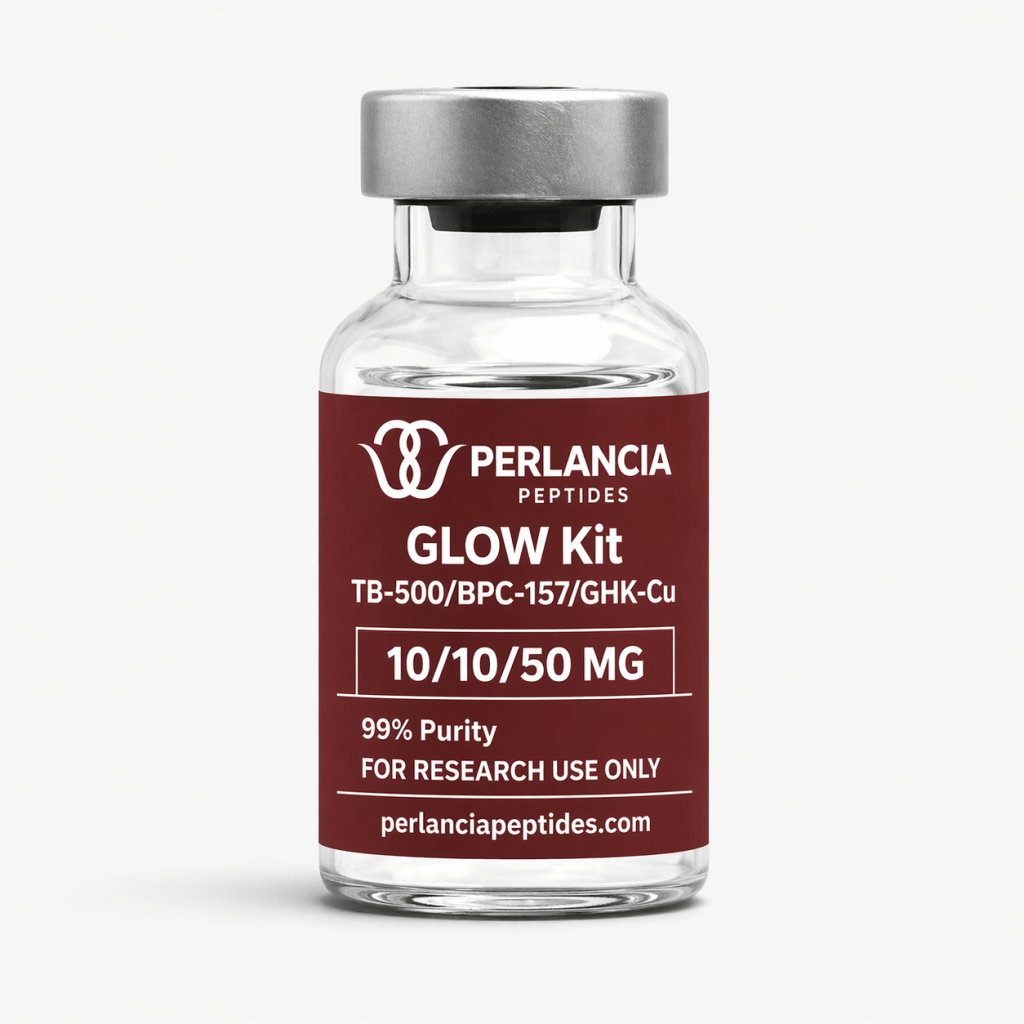
GHK-Cu (glycyl-L-histidyl-L-lysine copper complex) is a naturally occurring copper-binding tripeptide that has been widely examined in biochemical and cellular research. This peptide forms a stable complex with copper ions and has been studied in laboratory environments for its role in cellular signaling and copper transport mechanisms.
Research investigations involving GHK-Cu often explore its interaction with pathways related to tissue signaling, extracellular matrix dynamics, and gene expression regulation. Because of its ability to bind copper ions, GHK-Cu has attracted interest in biochemical studies examining how trace elements participate in cellular communication and molecular signaling.
This product is supplied as a high-purity lyophilized peptide intended for laboratory research and analytical applications.
Laboratory studies have investigated GHK-Cu in a variety of research contexts, including:
These areas of investigation aim to better understand how copper-binding peptides interact with cellular systems in controlled laboratory models.
Research has investigated several biological pathways associated with GHK-Cu activity in laboratory settings.
Studies have explored its interaction with:
These investigations help researchers understand how copper-binding peptides influence biochemical signaling networks in experimental systems.
GHK-Cu was first identified in human biological fluids during studies of copper-binding peptides. Since its discovery, it has been examined extensively in biochemical and cellular research.
Scientific investigations have explored:
Due to these properties, GHK-Cu remains a subject of interest in studies examining peptide-metal complexes and their influence on cellular signaling networks.
For research stability, this compound should be stored in a cool environment prior to reconstitution.
After reconstitution for laboratory applications, storage under refrigerated conditions is commonly used to maintain peptide stability during experimental use.
Avoid repeated freeze-thaw cycles when preparing research solutions.
FOR RESEARCH USE ONLY.
This product is intended strictly for laboratory research purposes. It is not intended for human or veterinary use.
GHK-Cu is a tripeptide complex consisting of glycyl-L-histidyl-L-lysine bound to a copper ion. The peptide was originally identified in human plasma during investigations into naturally occurring copper-binding peptides.
The peptide belongs to a class of bioactive copper-binding peptides that interact with trace metal ions in biological systems. Because copper plays an important role in enzymatic activity and cellular signaling, researchers have explored the ability of GHK-Cu to influence biochemical pathways associated with copper transport and regulation.
Over time, laboratory research has examined the peptide’s ability to participate in molecular signaling processes and gene expression pathways associated with extracellular matrix components and cellular communication.
GHK-Cu has been investigated in laboratory studies examining how copper-binding peptides interact with signaling pathways involved in cellular communication.
These studies often explore how peptide-metal complexes participate in regulatory networks within cell culture environments.
Some research models examine the relationship between copper-binding peptides and extracellular matrix signaling pathways. These investigations aim to better understand how peptide interactions may influence structural protein pathways in controlled experimental conditions.
Laboratory studies have explored the relationship between GHK-Cu and gene expression regulation mechanisms. Researchers examine how the peptide interacts with molecular pathways that influence transcriptional signaling in experimental systems.
Because GHK-Cu binds copper ions, it is frequently studied in biochemical experiments focused on peptide-metal complexes and their role in cellular regulatory processes.
These studies contribute to broader research on trace element signaling in biological systems.
Research has examined the interaction of GHK-Cu with several biochemical pathways, including:
These interactions are studied in laboratory models to understand how copper-binding peptides participate in molecular signaling environments.
Scientific literature on GHK-Cu spans multiple areas of biochemical and cellular research.
Researchers have investigated:
These studies contribute to the broader understanding of peptide-metal interactions and their potential roles within biological research models.
Research literature related to GHK-Cu can be found in scientific databases and journals including:
Researchers seeking detailed studies can consult these resources for experimental data and peer-reviewed findings related to copper-binding peptides.
There are no reviews yet.
Only logged in customers who have purchased this product may leave a review.
GHK-Cu (glycyl-L-histidyl-L-lysine copper complex) is a naturally occurring copper-binding tripeptide that has been widely examined in biochemical and cellular research. This peptide forms a stable complex with copper ions and has been studied in laboratory environments for its role in cellular signaling and copper transport mechanisms.
Research investigations involving GHK-Cu often explore its interaction with pathways related to tissue signaling, extracellular matrix dynamics, and gene expression regulation. Because of its ability to bind copper ions, GHK-Cu has attracted interest in biochemical studies examining how trace elements participate in cellular communication and molecular signaling.
This product is supplied as a high-purity lyophilized peptide intended for laboratory research and analytical applications.
Laboratory studies have investigated GHK-Cu in a variety of research contexts, including:
These areas of investigation aim to better understand how copper-binding peptides interact with cellular systems in controlled laboratory models.
Research has investigated several biological pathways associated with GHK-Cu activity in laboratory settings.
Studies have explored its interaction with:
These investigations help researchers understand how copper-binding peptides influence biochemical signaling networks in experimental systems.
GHK-Cu was first identified in human biological fluids during studies of copper-binding peptides. Since its discovery, it has been examined extensively in biochemical and cellular research.
Scientific investigations have explored:
Due to these properties, GHK-Cu remains a subject of interest in studies examining peptide-metal complexes and their influence on cellular signaling networks.
For research stability, this compound should be stored in a cool environment prior to reconstitution.
After reconstitution for laboratory applications, storage under refrigerated conditions is commonly used to maintain peptide stability during experimental use.
Avoid repeated freeze-thaw cycles when preparing research solutions.
FOR RESEARCH USE ONLY.
This product is intended strictly for laboratory research purposes. It is not intended for human or veterinary use.
GHK-Cu is a tripeptide complex consisting of glycyl-L-histidyl-L-lysine bound to a copper ion. The peptide was originally identified in human plasma during investigations into naturally occurring copper-binding peptides.
The peptide belongs to a class of bioactive copper-binding peptides that interact with trace metal ions in biological systems. Because copper plays an important role in enzymatic activity and cellular signaling, researchers have explored the ability of GHK-Cu to influence biochemical pathways associated with copper transport and regulation.
Over time, laboratory research has examined the peptide’s ability to participate in molecular signaling processes and gene expression pathways associated with extracellular matrix components and cellular communication.
GHK-Cu has been investigated in laboratory studies examining how copper-binding peptides interact with signaling pathways involved in cellular communication.
These studies often explore how peptide-metal complexes participate in regulatory networks within cell culture environments.
Some research models examine the relationship between copper-binding peptides and extracellular matrix signaling pathways. These investigations aim to better understand how peptide interactions may influence structural protein pathways in controlled experimental conditions.
Laboratory studies have explored the relationship between GHK-Cu and gene expression regulation mechanisms. Researchers examine how the peptide interacts with molecular pathways that influence transcriptional signaling in experimental systems.
Because GHK-Cu binds copper ions, it is frequently studied in biochemical experiments focused on peptide-metal complexes and their role in cellular regulatory processes.
These studies contribute to broader research on trace element signaling in biological systems.
Research has examined the interaction of GHK-Cu with several biochemical pathways, including:
These interactions are studied in laboratory models to understand how copper-binding peptides participate in molecular signaling environments.
Scientific literature on GHK-Cu spans multiple areas of biochemical and cellular research.
Researchers have investigated:
These studies contribute to the broader understanding of peptide-metal interactions and their potential roles within biological research models.
Research literature related to GHK-Cu can be found in scientific databases and journals including:
Researchers seeking detailed studies can consult these resources for experimental data and peer-reviewed findings related to copper-binding peptides.



Reviews
There are no reviews yet.
Only logged in customers who have purchased this product may leave a review.