Description
Overview
Semaglutide is a synthetic peptide analog that has been widely studied in metabolic and endocrine signaling research. It belongs to a class of peptides that interact with glucagon-like peptide-1 (GLP-1) receptors, which play a role in various physiological signaling pathways. In laboratory settings, semaglutide is used as a research compound to examine GLP-1 receptor activity and related metabolic signaling processes. Researchers study this peptide to better understand receptor-mediated communication within endocrine and metabolic systems. Semaglutide is supplied as a high-purity lyophilized peptide intended for laboratory and analytical research environments.Research Applications
Semaglutide has been investigated in several areas of scientific research, including:- Metabolic signaling research related to GLP-1 receptor pathways
- Endocrine system research examining peptide hormone signaling mechanisms
- Receptor interaction studies involving GLP-1 receptor activation and downstream cellular signaling
- Cellular communication research exploring peptide-mediated signaling between metabolic tissues
- Pharmacological pathway studies analyzing the behavior of long-acting GLP-1 analogs in controlled laboratory models
Mechanism and Pathway Context
Research has investigated semaglutide for its interaction with GLP-1 receptors, which are part of the broader glucagon peptide hormone family involved in metabolic signaling pathways. Studies have explored how GLP-1 receptor activation influences intracellular signaling cascades that regulate cellular communication within metabolic tissues. These pathways are commonly examined in endocrine and metabolic research environments. Laboratory investigations often examine:- GLP-1 receptor binding and activation
- downstream intracellular signaling mechanisms
- interactions between peptide hormones and metabolic regulatory pathways
- receptor-mediated cellular communication processes
Research Summary
Semaglutide is a modified peptide analog derived from glucagon-like peptide-1 (GLP-1), a naturally occurring peptide hormone involved in metabolic signaling processes. Since its development, semaglutide has been widely examined in laboratory settings for its interaction with GLP-1 receptors and related signaling pathways. Scientific investigations have explored how long-acting GLP-1 analogs interact with endocrine signaling systems and metabolic regulatory networks. Research literature continues to explore the structural characteristics and receptor-binding properties of GLP-1 analog peptides in controlled laboratory environments.Product Specifications
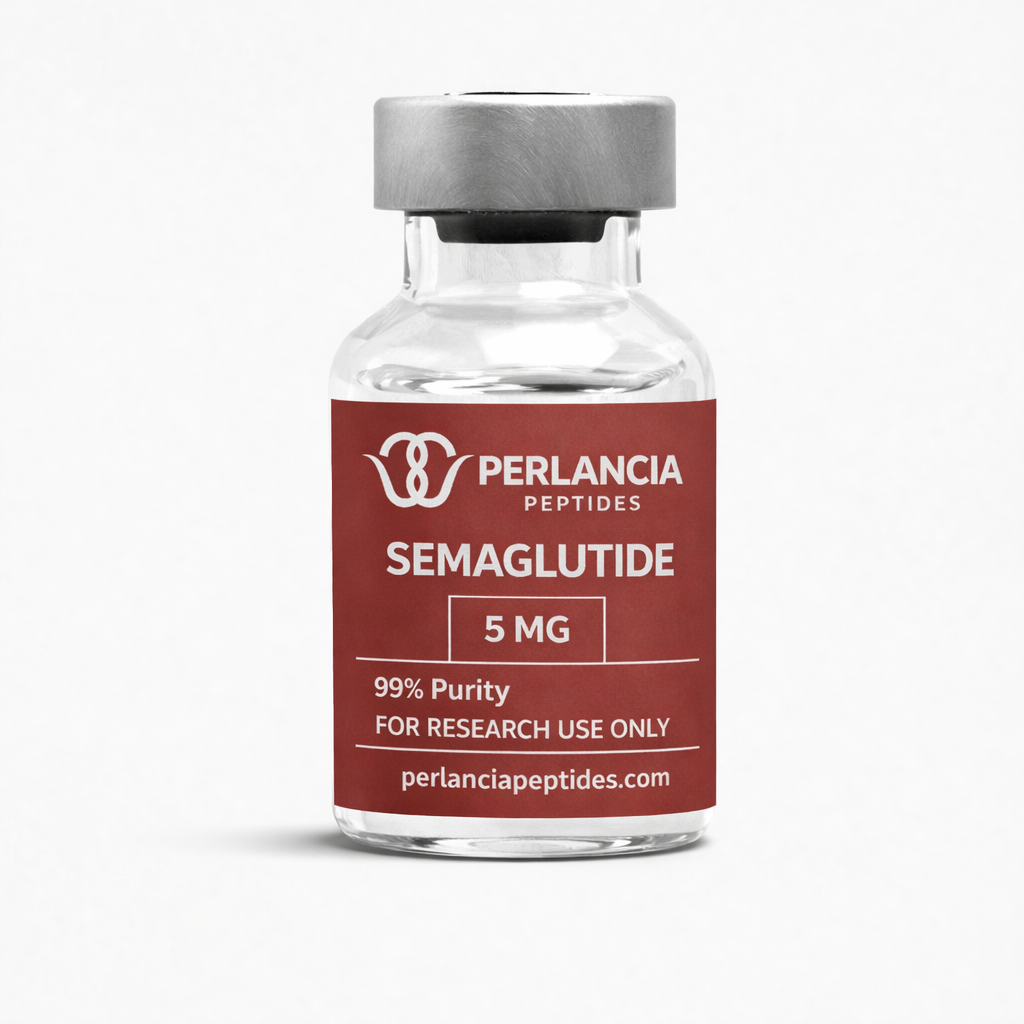
- Peptide Name: Semaglutide (GLP-1 Analog)
- Peptide Amount: 5 mg per vial
- Purity: ≥99%
- Format: Lyophilized powder
- Grade: Research grade peptide compound
- Synthesis Method: Solid-phase peptide synthesis
- Category: Metabolic signaling research peptide
Storage and Handling
For laboratory research stability, this compound should be stored under refrigerated conditions after reconstitution. Proper storage conditions help maintain peptide stability and structural integrity during laboratory research applications. Handling should follow standard laboratory practices appropriate for peptide research materials.Research Use Disclaimer
FOR RESEARCH USE ONLY. This product is intended strictly for laboratory research purposes. It is not intended for human or veterinary use.Scientific Background
Semaglutide is a synthetic peptide analog derived from glucagon-like peptide-1 (GLP-1), a hormone naturally produced within the gastrointestinal system. GLP-1 belongs to the glucagon peptide hormone family, which plays an important role in metabolic signaling pathways. Scientists developed semaglutide to explore the behavior of modified GLP-1 analogs that demonstrate extended biological stability and receptor interaction properties in laboratory models. The structural modifications present in semaglutide allow researchers to investigate long-acting GLP-1 receptor interactions and associated signaling pathways. This has made the peptide a commonly studied compound within metabolic and endocrine research fields.Key Research Areas
Metabolic Pathway Research
Semaglutide is frequently studied in laboratory models examining GLP-1 receptor signaling and metabolic regulatory pathways. Research in this area focuses on understanding how peptide hormones influence cellular communication within metabolic tissues.Receptor Signaling Research
Studies have explored the interaction between semaglutide and GLP-1 receptors, including receptor binding characteristics and downstream signaling events. These investigations help researchers better understand peptide hormone receptor activation.Endocrine System Research
GLP-1 analogs such as semaglutide are also examined in endocrine system research to better understand peptide-mediated signaling within hormonal regulatory networks.Cellular Regulation Research
Laboratory research has explored how GLP-1 receptor activation influences intracellular signaling processes and communication between metabolic cells. These investigations contribute to broader studies of peptide signaling pathways.Pathway Interaction Overview
Research has examined semaglutide’s interaction with GLP-1 receptor pathways, which are part of a broader network of metabolic regulatory signaling mechanisms. GLP-1 receptors belong to the G-protein coupled receptor (GPCR) family, which are commonly studied in cellular communication and hormone signaling research. Studies have investigated how GLP-1 receptor activation may influence intracellular signaling cascades that regulate metabolic communication between tissues. These pathways are frequently examined within metabolic and endocrine research models.Literature Overview
Scientific literature related to semaglutide primarily focuses on the structural characteristics and receptor interaction properties of GLP-1 analog peptides. Research publications often explore:- peptide modifications that extend biological stability
- receptor binding characteristics of GLP-1 analogs
- signaling pathways activated by GLP-1 receptor interaction
- laboratory investigations of peptide hormone signaling mechanisms
References
Researchers seeking additional information about semaglutide and GLP-1 receptor research may consult scientific literature available through:- Marso SP, Bain SC, Consoli A, et al. Semaglutide and cardiovascular outcomes in patients with type 2 diabetes. New England Journal of Medicine. 2016;375(19):1834-1844. PMID: 27633186.
- Nauck MA, Quast DR, Wefers J, Meier JJ. GLP-1 receptor agonists in the treatment of type 2 diabetes — state-of-the-art. Molecular Metabolism. 2021;46:101102. PMID: 33068776.
- Drucker DJ. Mechanisms of action and therapeutic application of glucagon-like peptide-1. Cell Metabolism. 2018;27(4):740-756. PMID: 29617641.
- Wilding JPH, Batterham RL, Calanna S, et al. Once-weekly semaglutide in adults with overweight or obesity. New England Journal of Medicine. 2021;384(11):989-1002. PMID: 33567185.

Reviews
There are no reviews yet.
Only logged in customers who have purchased this product may leave a review.